


The flashing lights in your rearview mirror, the imposing presence at a community event, or the swift response to an emergency – law enforcement vehicles are far more than just transportation. They are mobile offices, tactical command centers, and symbols of public safety. For military and security professionals, civilian fleet managers, and vehicle enthusiasts alike, understanding the diverse capabilities and specialized designs of these machines offers a fascinating glimpse into the operational demands of modern policing.
These are not your average civilian cars; law enforcement vehicles are meticulously engineered and upfitted to withstand rigorous daily use, provide officer safety, and carry mission-critical equipment. From the ubiquitous patrol car to highly specialized armored units, each vehicle type plays a distinct and vital role. This article delves into nine key categories, exploring their unique features, operational significance, and the technology that makes them indispensable assets.
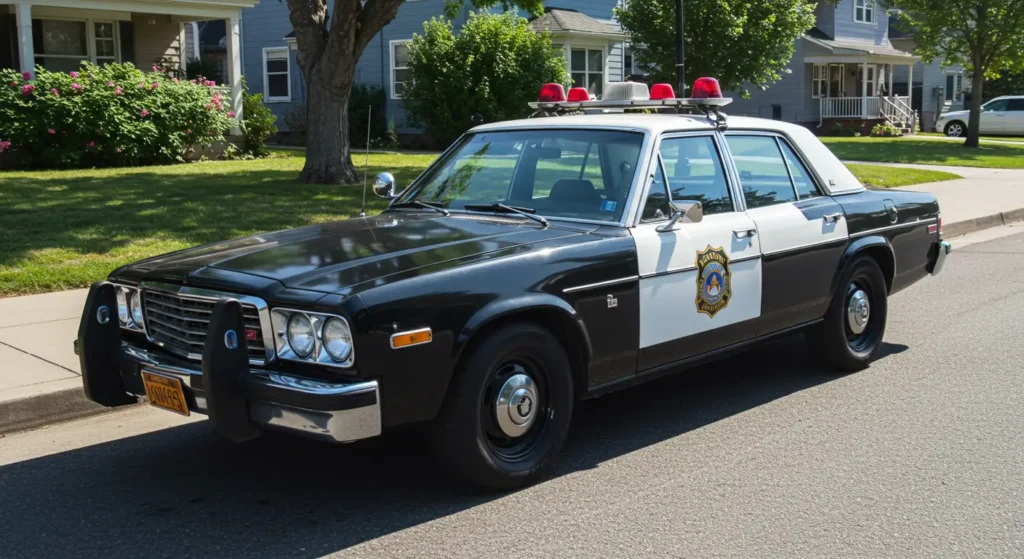
1. Patrol Cars: The Backbone of the Fleet
The patrol car is arguably the most recognizable type of law enforcement vehicle. These are the workhorses of any police department, responsible for routine patrols, rapid response to calls, traffic enforcement, and providing a visible deterrent to crime.
– Common Models: Ford Police Interceptor Utility (based on the Explorer), Dodge Charger Pursuit, Chevrolet Tahoe PPV.
– Key Features:
- Reinforced Construction: Heavy-duty frames, suspension, and cooling systems to handle demanding driving conditions and extended idle times.
- Performance Packages: Upgraded engines, brakes, and tires designed for pursuit capabilities and enhanced handling.
- Integrated Technology: Mobile Data Terminals (MDTs), advanced communication systems, GPS, and often, in-car video recording.
- Officer Safety: Ballistic door panels, secure prisoner transport cages, and ergonomically designed interiors for long shifts.
- Operational Significance: Patrol cars, often referred to as police cruisers, are the first line of response. Their versatility allows officers to perform a wide array of duties, making them the cornerstone of community policing and emergency response. Fleet managers focus on their durability, total cost of ownership, and the efficiency of their specialized police equipment.
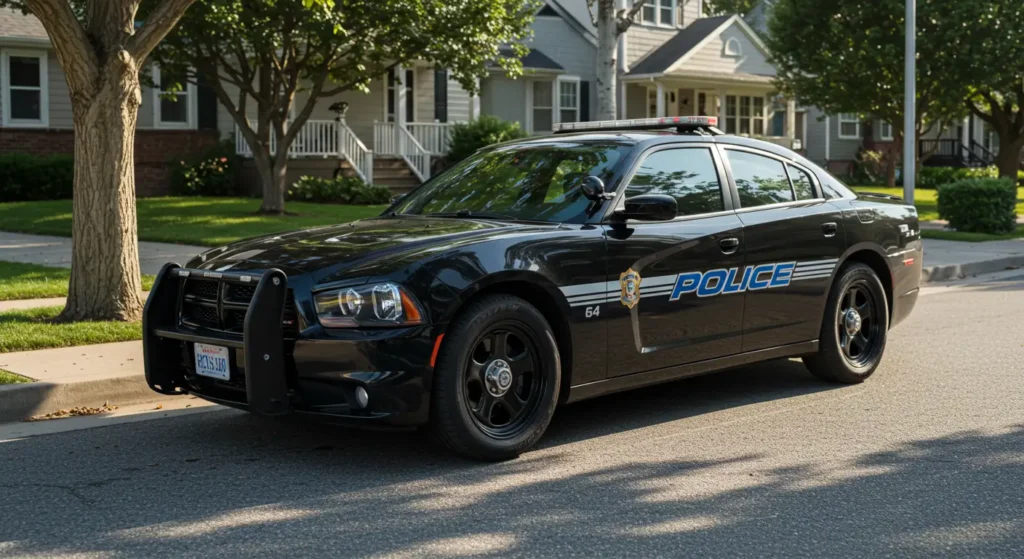
2. High-Speed Pursuit Vehicles: Engineered for Interception
When a situation escalates to a high-speed chase, specialized pursuit vehicles are called upon. While many modern patrol cars have pursuit ratings, some agencies invest in vehicles with even greater speed and handling capabilities, particularly for highway patrol or specialized units.
– Examples: Often high-performance variants of sedans or SUVs (like the aforementioned Charger or Tahoe with top-tier engine packages), or in some international contexts, even sports cars.
– Key Features:
- Powerful Drivetrains: High-output engines, performance-tuned transmissions, and often all-wheel-drive for superior acceleration and traction.
- Advanced Suspension and Braking: Systems designed to maintain stability and control at high speeds and during aggressive maneuvers.
- Aerodynamic Enhancements: Subtle modifications to reduce drag and improve stability.
- Driver-Focused Cockpit: Controls and displays optimized for high-stress, high-concentration driving.
- Operational Significance: The primary role is the safe and swift apprehension of fleeing suspects. These law enforcement vehicles must balance raw power with precision handling, ensuring officer and public safety remains paramount. The decision to engage in a pursuit is always weighed against potential risks.
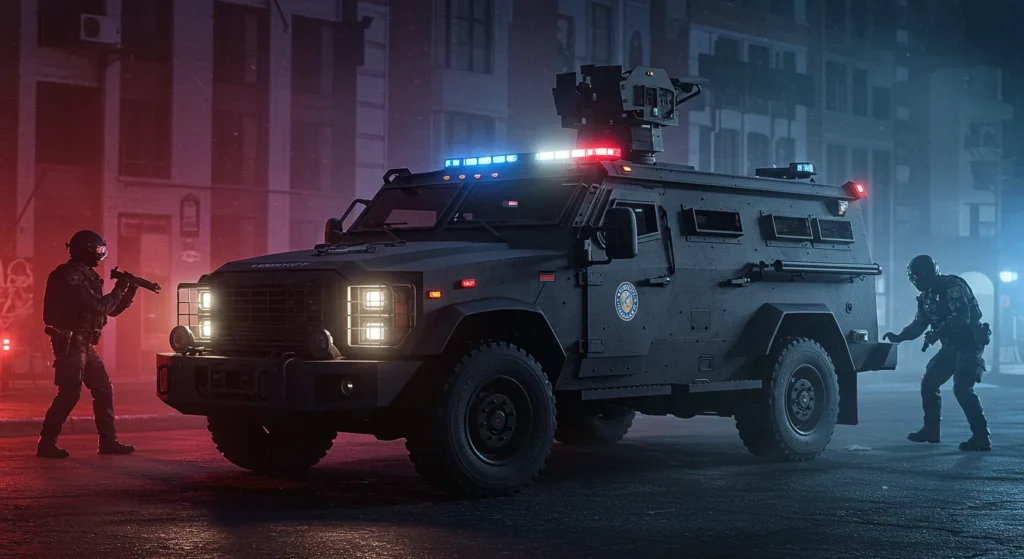
3. Special Weapons and Tactics (SWAT) Vehicles: Mobile Fortresses
For high-risk incidents such as hostage situations, active shooter events, or serving high-risk warrants, Special Weapons and Tactics (SWAT) teams rely on heavily armored vehicles. These are designed to protect officers and civilians in volatile environments.
– Common Models: Lenco BearCat, BATT (Ballistic Armored Tactical Transport) vehicles, repurposed MRAPs (Mine-Resistant Ambush Protected vehicles).
– Key Features:
- Heavy Armor Plating: Capable of stopping high-caliber rifle rounds and shrapnel.
- Ballistic Glass: Multi-layered windows providing protection without compromising visibility.
- Gun Ports: Allowing officers to return fire from within the safety of the vehicle.
- Breaching Equipment: Rams or tools for forced entry.
- Non-Lethal Options: Often equipped with Long Range Acoustic Devices (LRADs) or other crowd dispersal tools.
- High Ground Clearance & Off-Road Capability: To navigate difficult terrain.
- Operational Significance: These armored rescue vehicles serve as mobile cover, transportation for heavily armed officers, and a platform for deploying tactical equipment. Their imposing presence can also act as a de-escalation tool. For security professionals, understanding their capabilities is crucial for planning responses to critical incidents.
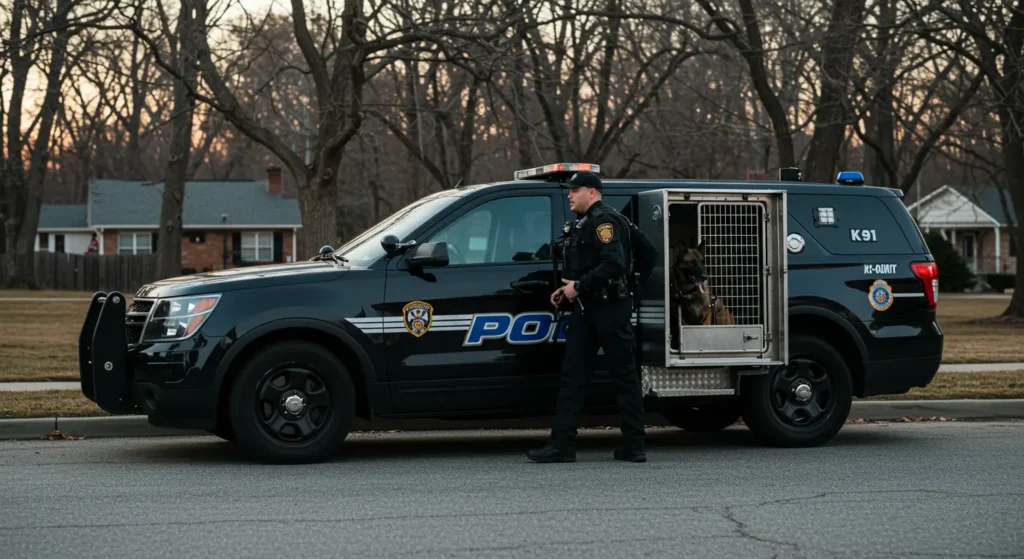
4. K-9 Unit Transporters: Partners On Patrol
Police dogs are invaluable assets, and their specialized transportation reflects their importance. K-9 unit vehicles are modified to ensure the safety, comfort, and rapid deployment of a canine officer and their handler.
– Common Models: Typically SUVs or specially outfitted sedans.
– Key Features:
- Secure Kennels: Often built into the rear passenger or cargo area, designed for safety and easy cleaning.
- Climate Control Systems: Dedicated rear A/C and heating, sometimes with temperature monitoring and alarm systems (e.g., “hot dog” alerts) to protect the animal.
- Rapid Deployment Systems: Doors that can be remotely opened by the handler to release the K-9.
- Storage: Compartments for leashes, training aids, first-aid kits, and food/water.
- Waterproof and Durable Interiors: To withstand wear and tear.
- Operational Significance: These vehicles ensure the K-9 arrives on scene safely and ready to work. Whether tracking suspects, detecting narcotics or explosives, or assisting in apprehensions, the K-9 is a critical team member, and their specialized transport is non-negotiable.
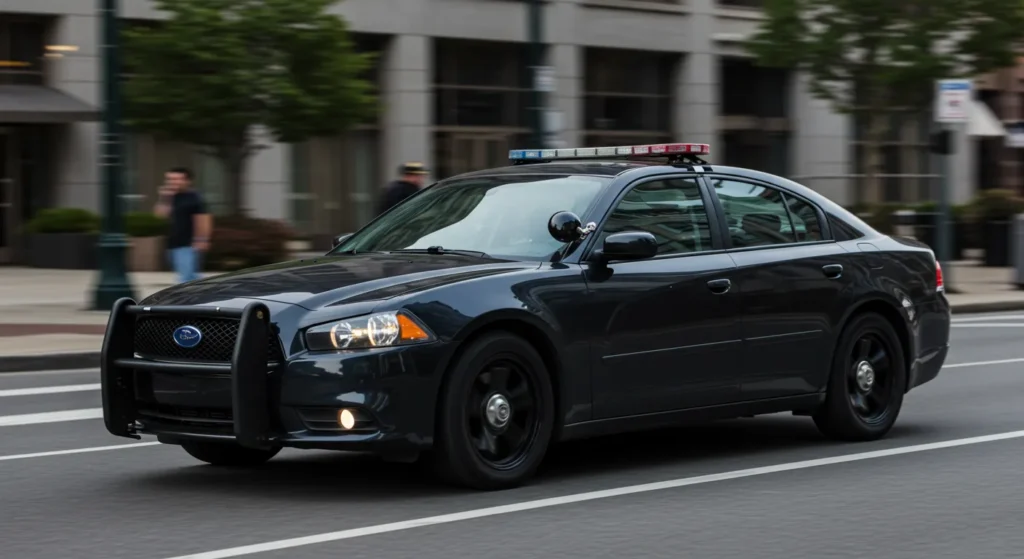
5. Undercover and Unmarked Vehicles: Blending In for a Tactical Edge
Not all law enforcement vehicles are designed to be conspicuous. Undercover and unmarked cars are crucial for surveillance, covert operations, and intelligence gathering where blending in with civilian traffic is paramount.
– Common Models: A wide variety of sedans, SUVs, vans, and even trucks that are common in the local area to avoid suspicion.
– Key Features:
- Inconspicuous Appearance: Standard paint jobs, no external markings (or easily removable/concealable ones).
- Concealed Emergency Equipment: Hidden LED lights within grilles, visors, or tail lights; sirens that are not immediately visible.
- Advanced Surveillance Technology: May be equipped with discrete audio/video recording systems, tracking devices, or specialized communications gear.
- Performance Surprises: Some may have performance packages hidden beneath a mundane exterior.
- Operational Significance: These vehicles allow officers to observe and gather evidence without alerting suspects. They are vital for narcotics investigations, organized crime units, and dignitary protection details. The art of outfitting these vehicles lies in balancing operational needs with absolute discretion.
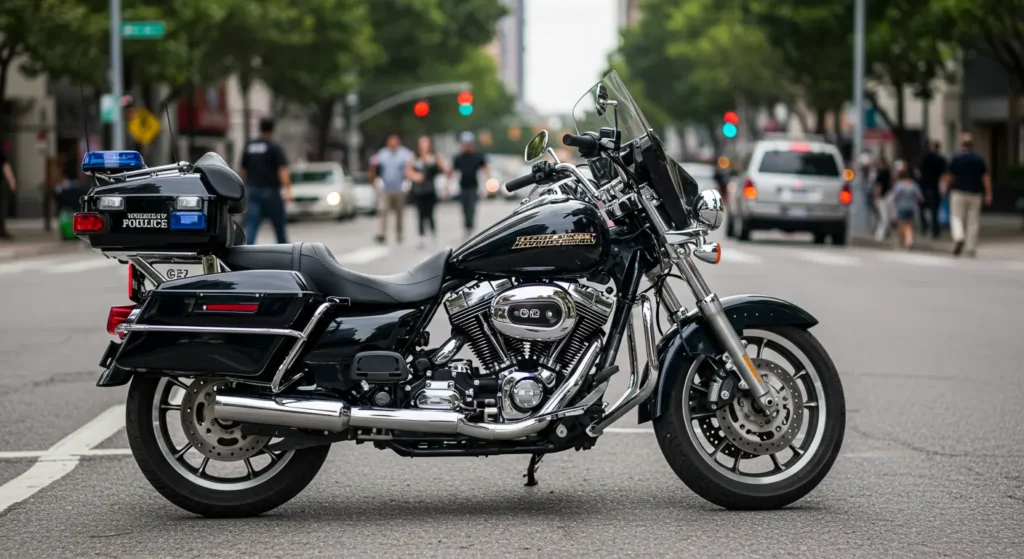
6. Motorcycle Units: Agile and Versatile Navigators
Police motorcycles offer a unique blend of agility, speed, and public relations benefits. They are particularly effective in congested urban environments and for specialized duties.
– Common Models: Harley-Davidson Electra Glide Police, BMW R 1250 RT-P.
– Key Features:
- Maneuverability: Ability to navigate tight spaces, filter through traffic, and respond quickly in crowded areas.
- Acceleration: Quick off the line for traffic stops and escorts.
- Specialized Storage: Saddlebags and compartments for ticket books, rain gear, first-aid kits, and communication equipment.
- Enhanced Visibility: Often equipped with additional lighting and loud sirens; the officer’s presence is also more visible.
- Operational Significance: Motorcycle units excel at traffic enforcement, escorting motorcades, parade duty, and community engagement. Their smaller footprint and agility make them indispensable for tasks where larger law enforcement vehicles would be cumbersome.

7. Command and Control Vehicles: The Mobile Headquarters
During large-scale incidents, natural disasters, or major public events, a centralized coordination point is essential. Mobile Command and Control (MCC) vehicles serve as on-scene headquarters, providing a robust platform for communication and decision-making.
– Common Models: Often based on large RV chassis, buses, or custom-built trailers.
– Key Features:
- Advanced Communication Arrays: Satellite uplinks, multiple radio band capabilities, secure data networks, and cellular boosters.
- Data Processing Centers: Computers, monitors, and software for real-time information display (maps, video feeds, resource tracking).
- Meeting and Briefing Areas: Space for commanders and agency representatives to collaborate.
- Independent Power Generation: Onboard generators to operate for extended periods.
- Surveillance Capabilities: Often equipped with telescopic masts for cameras or antennas.
- Operational Significance: These vehicles bring sophisticated command infrastructure directly to the heart of an operation. They enable seamless inter-agency communication and provide incident commanders with the tools needed to manage complex situations effectively. They are a cornerstone of effective emergency response.

8. Forensic and Crime Scene Investigation (CSI) Vans: The Rolling Labs
Preserving evidence integrity is paramount in any investigation. CSI vans are purpose-built mobile laboratories designed to support forensic teams in meticulously collecting, documenting, and preserving evidence at crime scenes.
– Common Models: Typically vans or small trucks with custom-fitted interiors.
– Key Features:
- Organized Storage: Compartments and drawers for a vast array of collection kits (DNA, fingerprints, trace evidence), cameras, and documentation tools.
- Lighting: Ample interior and exterior lighting, including specialized forensic light sources.
- Power Sources: Outlets and sometimes generators for equipment.
- Climate Control: To protect sensitive evidence and equipment.
- Refrigeration: For temporary storage of biological samples.
- Workstations: Small desks or benches for on-site documentation.
- Operational Significance: By bringing essential tools directly to the scene, CSI vans help ensure evidence is handled correctly from the outset, maintaining the chain of custody and improving the quality of forensic analysis. These specialized law enforcement vehicles are crucial for building strong criminal cases.
9. Future Forward: The Next Generation of Law Enforcement Vehicles
The landscape of law enforcement vehicles is continually evolving, driven by technological advancements, changing operational needs, and a growing focus on sustainability and officer well-being.
– Key Trends and Innovations:
- Electric Vehicles (EVs): Departments are increasingly exploring and adopting EVs for patrol and administrative use due to lower running costs, reduced emissions, and quiet operation (tactical advantage). Models like the Ford Mustang Mach-E and F-150 Lightning are being tested and deployed.
- AI and Connectivity: Enhanced data sharing, predictive policing capabilities (used with caution and ethical oversight), and AI-assisted analysis of in-car video footage.
- Drone Deployment Platforms: Vehicles designed to launch, recover, and control unmanned aerial vehicles (UAVs) for surveillance, search and rescue, and accident reconstruction.
- Enhanced Officer Safety and Ergonomics: Smarter interior layouts, improved ballistic protection, and integrated health monitoring systems.
- Non-Lethal Technology Integration: Vehicles equipped with advanced systems for de-escalation and crowd management.
- Operational Significance: The future of law enforcement vehicles will be shaped by a desire for greater efficiency, enhanced capabilities, improved officer safety, and a more sustainable approach to fleet management. This evolution promises to provide law enforcement professionals with even more sophisticated tools to protect and serve their communities.
Conclusion: The Unseen sophistication Behind the Badge
The world of law enforcement vehicles is far more complex and specialized than many realize. Each vehicle, from the daily patrol car to the imposing SWAT truck or the advanced mobile command center, is a carefully considered investment designed to meet specific operational demands. For fleet managers, this means balancing budget with capability; for security professionals, it’s about understanding the tactical advantages each platform offers; and for enthusiasts, it’s a continuous showcase of automotive engineering pushed to its limits.
As technology continues to advance and the challenges facing law enforcement evolve, so too will these critical assets. The ongoing innovation ensures that officers and agencies have the best possible tools to maintain public safety, respond to emergencies, and uphold the law effectively and efficiently. The flashing lights and siren are just the beginning; behind them lies a world of dedicated design and purpose-built capability.


